Secured vs Unsecured Business Loans: What’s Best for SMEs? (revealed here)

Alan Bermingham
10 Years in non banking finance
Published:
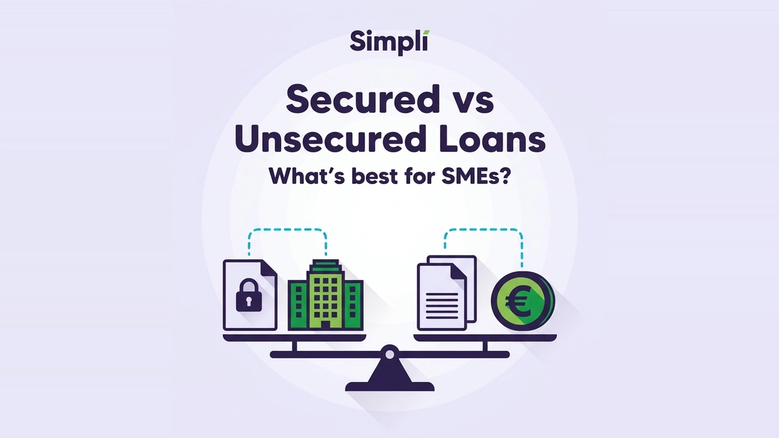
Secured or unsecured. It sounds like a simple either-or, but it's the decision that shapes everything else about your loan: the rate you pay, the amount you can borrow, how fast the money lands, and what happens if things go wrong.
We help Irish SMEs make this call every week, and the honest answer is that neither option is "better". A secured loan that saves you 4% in interest is a bad deal if the valuation drags on for two months while your supplier deadline passes. An unsecured loan approved in days is a bad deal if you're paying 13% on money your property could have secured at 6%.
This guide puts the two side by side: rates, amounts, speed, security, personal guarantees, and exactly when each one wins. By the end you'll know which route fits your business, not just in theory but for the specific thing you need to fund.
- Secured loans pledge an asset (property, equipment, invoices) and typically price from around 5.5% to 8.5%, with amounts running into the millions.
- Unsecured loans need no collateral but cost more, usually 8% to 15%, and most lenders cap out between €250,000 and €500,000.
- Speed is the real trade-off: unsecured decisions come in days, while secured deals wait on valuations and legal work, often 4 to 8 weeks.
- "Unsecured" rarely means risk-free: almost every unsecured business loan in Ireland still requires a personal guarantee from the directors.
The Real Difference Between Secured and Unsecured Business Loans
A secured loan is backed by an asset. Property, equipment, vehicles, stock, even your debtor book can stand behind the borrowing. If the loan isn't repaid, the lender has a legal claim on that asset. Because their downside is covered, they lend more, for longer, at lower rates.
An unsecured loan is backed by your trading performance instead. The lender reads your bank statements, revenue and credit history, and prices the risk into the rate. No charge is registered over any asset, which is why approval is so much faster: there's no valuation, no solicitor, no land registry.
Both structures are usually written as fixed term loans, a set amount repaid monthly over an agreed term, so the repayment mechanics feel identical. The difference is entirely in what's standing behind the loan, and that one difference drives everything in the table below.
One thing we tell every client early: "unsecured" does not mean "nothing at stake". Nearly every unsecured business loan in Ireland requires a personal guarantee, which means the directors personally promise to repay if the company can't. The company's assets stay unencumbered, but your personal exposure is real.
Secured vs Unsecured: The Side by Side Numbers
Here's how the two compare on the measures that actually matter when you're choosing.
The rate gap is the headline, but look at the speed row too. On a €100,000 loan over five years, the difference between 6.5% and 11% is roughly €250 a month. That matters. But if the funding is for an opportunity with a deadline, a stock deal, a fit-out slot, a contract that needs upfront spend, the six-week wait on a secured deal can cost you far more than €250 a month.
How Secured Borrowing Works in Practice
The classic version is a term loan secured on commercial property. But in the deals we take to lenders every week, security comes in more shapes than most owners realise.
Equipment and vehicles can secure their own purchase, which is exactly how equipment finance works: the machine is the collateral, so there's no need to touch your property at all. Your debtor book can secure a revolving facility. Stock, contracts and even brand value can support borrowing through asset-based lending structures that look at the whole balance sheet rather than one asset.
The process is slower because the lender has to verify what they're lending against. Expect a professional valuation, legal work to register the charge, and proof of ownership and insurance on the asset. That's the 4 to 8 weeks in the table, and there's usually a valuation fee and legal costs of a few hundred to a few thousand euro on top.
The payoff is real, though. Lower rates, longer terms and bigger amounts mean secured borrowing is nearly always the right call for large, planned investments where a few weeks of lead time doesn't hurt you.
How Unsecured Borrowing Works in Practice
Unsecured lending in Ireland has changed a lot in the last few years. Alternative lenders now assess affordability straight from 6 to 12 months of bank statements, which means a trading business with steady turnover can get a decision in days without two years of filed accounts.
The trade-off is price and size. Most unsecured business loans in Ireland sit between €10,000 and €250,000, with a handful of lenders stretching to €500,000 for strong trading businesses. Terms are shorter, usually 6 months to 5 years, and rates start around 8% for the strongest applicants and climb to 15% or more where the risk is higher.
Where unsecured loans shine is working capital: stock for a busy season, a tax bill, hiring ahead of a contract, bridging the gap while a bigger facility completes. The money arrives while the opportunity is still on the table, and nothing is charged against your assets, so your property stays free to secure something bigger later.
We see plenty of businesses run both at once. A secured loan funds the premises or the big kit, and an unsecured facility handles the short-term swings. They're tools for different jobs, not rivals.
Rates, Personal Guarantees and the Fine Print
The pricing logic is simple: the more protection the lender has, the less they charge. That's the whole reason business loan interest rates in Ireland span such a wide range, from bank-secured deals under 6% to unsecured facilities in the mid-teens.
But the advertised rate isn't the whole cost. On secured deals, add valuation fees, legal fees and arrangement fees of 1% to 2%. On unsecured deals, watch for arrangement fees and how interest is quoted: a "factor rate" or flat rate can look smaller than the true annual cost, so always ask for the total repayable in euro.
Then there's the personal guarantee. On a secured loan, a strong asset can sometimes carry the deal on its own. On an unsecured loan, assume the directors will sign a PG, full stop. It's not a reason to avoid unsecured borrowing, but it means the honest comparison is never "my assets at risk vs nothing at risk". It's "the business's assets vs my personal covenant".
Some deals sidestep the choice entirely. Repayments that flex with turnover suit seasonal trade better than either structure, and it's worth reading how revenue-based lending compares with a bank loan before you commit to fixed monthly repayments that January might not support.
When Each Option Wins
Go secured when the amount is large, the purpose is long-term and you have the asset. Buying premises, a major refurbishment, acquiring another business, funding plant that will earn for a decade. The lower rate compounds into serious savings over a long term, and the longer repayment period keeps the monthly figure manageable.
Go unsecured when speed matters more than rate, when the amount is modest, or when you simply don't have assets to pledge. Young companies, service businesses, and anyone funding working capital rather than assets usually land here. Paying a few points more for money that arrives this week is often the profitable choice.
There's also a timing angle most owners miss. Short, sharp funding gaps, like buying a property before another sells, are a job for bridging finance rather than either a standard secured or unsecured term loan. Matching the product to the timeline matters as much as matching it to the asset.
And if you're genuinely stuck between the two, borrow the way lenders think: fund long-term assets with long-term secured money, and short-term needs with short-term unsecured money. Mismatching those, like funding a premises purchase on expensive short-term debt, is where we see businesses get hurt.
How to Get Approved for Either
The core pack is the same for both routes. Lenders want filed accounts or recent management figures, 6 months of bank statements, a clean Central Credit Register record and up-to-date Revenue affairs, ideally with a current tax clearance cert. Our guide to business loan requirements in Ireland walks through the full checklist.
For secured applications, add proof of ownership, insurance details and any existing charges on the asset. Check the CRO for old charges from cleared loans that were never released: it's a small thing that regularly delays completions by weeks.
For unsecured applications, your bank statements are the application. Lenders read average balances, revenue trends and existing repayments straight from them, so keep the account clean for a few months before applying: no missed direct debits, no gambling transactions, no constant brushes with the overdraft limit.
And don't take the first offer. The spread between lenders on the same deal can be several percentage points, which is exactly why we broker across the whole market rather than sending clients to one door. The wider landscape of Irish business lending has more lenders in it than most owners ever hear about.
Final Thoughts
Secured borrowing buys you cheaper, bigger, longer money in exchange for time and a charge on your assets. Unsecured borrowing buys you speed and simplicity in exchange for a higher rate and a personal guarantee. Once you frame it that way, the choice usually makes itself: match the loan to the job, not the other way around.
The businesses that get this right treat the two as complementary. Secured facilities for the big, slow, strategic spends. Unsecured facilities for the fast, tactical ones. And a broker in their corner who knows which lender prices which deal best, because the same application can come back with wildly different terms depending on where it lands.
If you're weighing up a specific deal, run the numbers both ways before you sign anything. The right structure on day one is a lot cheaper than refinancing your way out of the wrong one.
Frequently Asked Questions
What is the main difference between secured and unsecured business loans?
A secured loan is backed by an asset like property or equipment, which the lender can claim if the loan isn't repaid. An unsecured loan has no asset behind it, so the lender relies on your trading performance and a personal guarantee, and charges a higher rate for the extra risk.
Which is easier to qualify for in Ireland?
It depends on what you have. With a valuable asset and clean title, secured approval is straightforward even for a younger business. Without assets, unsecured lenders who assess bank statements are the realistic route, provided you have steady turnover, usually 6 to 12 months of trading, and clean credit.
Do unsecured business loans really need no security at all?
No charge is registered over business assets, but almost every unsecured business loan in Ireland requires a personal guarantee from the directors. Your company's assets stay free, but you're personally committing to repay if the business can't, so read the guarantee wording carefully before signing.
Can I switch from an unsecured loan to a secured one later?
Yes, and it's often smart. Plenty of businesses start on unsecured funding, then refinance onto a secured facility once they've bought property or equipment worth pledging. The lower rate and longer term can cut the monthly repayment significantly, just check for early repayment fees on the existing loan first.